A Throwback Story
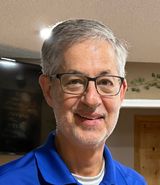
Get comfortable, friends, for a throwback travel tale you might find hard to believe.
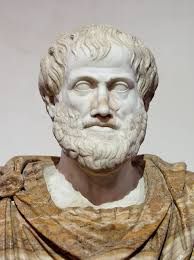
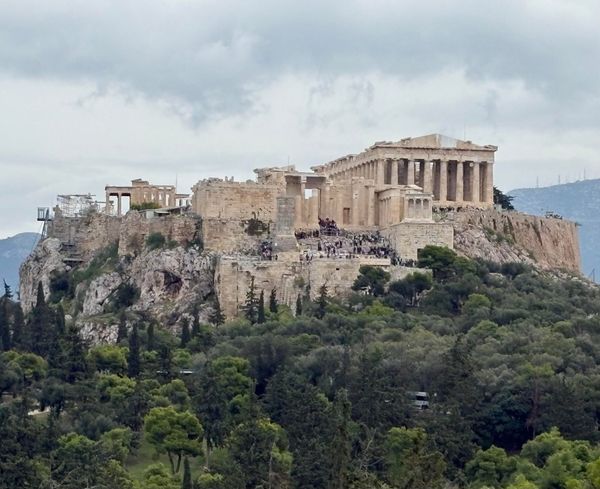
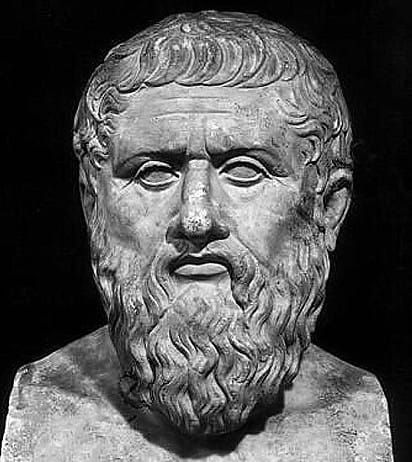
I was a philosophy major in college, with a special interest in the ancient Greeks. I had transferred from Duke to the University of South Carolina, in my hometown of Columbia. Accounting classes were boring, English classes required too much reading, and thanks to the philosophy department's lenient requirements, I could graduate one semester earlier as a philosophy major. Besides, when ever again would I have the time to study history's greatest thinkers? On the day I started writing this post, we left Rome for Greece. We've booked a half-day ancient philosophy tour in Athens, which makes me reflect on the summer I spent reading Plato’s dialogues.
In late spring of 1981. I was wrapping up my penultimate year at the University of South Carolina, with plans for a second consecutive summer in Washington, DC. The prior summer, I had studied at the very conservative Institute for Comparative Political and Economic Systems on the Georgetown University campus in the mornings and interned at the Federal Aviation Administration in the afternoons. My cubicle was right across the street from the Air and Space Museum.
My manager at the FAA invited me back for another summer until federal budget cuts mandated by the Reagan administration trickled down to the summer internship program, which was cut only a week before I was to arrive. The budget cuts barely registered as a tool to deliver Reagan’s Laffer Curve inspired policy fantasy that deep tax cuts (and a massive increase in defense spending) would lead to a balanced federal budget; when Reagan left office, the annual deficit was more than double what it was when he arrived. History repeats itself, but I must not digress too much.
With my summer plans dashed, my Dad invited me to join him in New Orleans, where he was already ensconced in a six-week grant project at the Tulane Law School. Dad was archiving the research materials from his book Unlikely Heroes, about the herculean work by a group of judges on the 5th Circuit Court of Appeals to implement Brown v. Board of Education (1954), the Supreme Court's landmark school desegregation decision. The law school had put him up in a two bedroom graduate student apartment. Not one to buy plane tickets for his own children, Dad suggested I could hitchhike to get there.
I got my sister to deliver me, with a duffel bag and $150, to a busy truck stop on I-20 outside Columbia. I figured it would be much safer to bum rides with professional truck drivers than to stand alongside the road with my thumb out. A simple “USC” logo on my t-shirt clearly identified me as a poor college kid deserving of a comfortable ride.
That worked surprisingly well for several rides, getting me through Atlanta and down I-85 into Alabama. Late at night, my ride ended a truck stop where there was a gap in interstate access. That trucker wanted to get some dinner and sleep overnight in the parking lot. Inside, we struck up a conversation with another trucker, a burly guy twice my size, who seemed to know the local area well. He was headed in the direction I need to go, that would connect to I-10 for the home stretch to New Orleans, and offered me a ride.
His truck, it turned out, was a pickup, the first non-18-wheeler of my journey and the first sign that something was amiss. I was no longer on an interstate highway, the second sign. Sometime after 2:00 am and 15 hours after I told my sister goodbye, he put his hand on my crotch. And THAT’S when I went from nearly asleep to heart-thumping, adrenalin-surging awake. I pushed his arm away and said “I don’t do that.”
There are three things that are all true here. The first is that I’m not homophobic, then or now. The second is that I’m straight, insofar as my sexual orientation. The third is that I wasn’t at all prepared to lose my backside virginity, involuntarily, in that particular moment. (The previous fall semester, I had taken a poetry class taught by James Dickey, author of Deliverance. IYKYK.) Perhaps this experience helped me to become a better feminist today.
During the ensuing half-hour of terrifying silence, I debated my options. We were on a long stretch of 2-lane road with no lights, no buildings, and no other signs of life. Asking to be let out of his truck seemed unwise. Still, he was twice my size. Would he take 'no' for an answer? Were we really headed to another truck stop at the entrance to I-10? Did I have anything in my duffel bag that I could turn into a weapon? Who was I kidding… me with a weapon?! Is this dilemma mostly Dad's fault, or Reagan's? Would I live to write about this story 45 years later?
Eventually he did pull into a truck stop adjoining I-10, and drove right up to the gas pumps. I made a beeline from there to the restaurant, where I soon found myself sharing coffee and conversation with a 30-ish deadbeat with two sad-looking suitcases. He explained that he had left a note on the kitchen table to let his wife and two kids in Florida know he wasn't coming back. His plan was to get work on an offshore oil rig in Louisiana. Because, you know, that’s a better life than what he left behind. Between 3 and 6 am, there wasn't anyone else to talk to, no internet, and I was scared to close my eyes for more than a blink. When the sky first began to lighten, Florida Man wished me well waiting for the 18-wheelers to wake up and set out to the highway.
A couple hours later and barely 10 miles to the west, now perched in the cab of a big rig, I passed Florida Man. His suitcases were on the ground, his thumb was out, and his ego looked severely deflated.
My newest truck driver was a hitchhiker’s dream. He had a sleeper cab with a mattress in the back, and insisted that I take advantage. He woke me up as we were approaching New Orleans, to ask exactly where I needed to go. I don’t recall how my father and I communicated, but I somehow knew the name of the restaurant where he'd be eating lunch. The trucker got on his CB radio and found me another ride that would take me right to the restaurant. I helped the next trucker unload some goods at a couple of stops, then he delivered me to where Dad was waiting with oysters on the half shell. All without using any apps on a smart phone. Every once in awhile, all the stars line up just right where all you can say is "a great miracle happened here."
The next five weeks in New Orleans were dominated by three recurring themes. First, Dad had an expense allowance from the law school, and took me to several of the grand dames of New Orleans’ restaurant scene, including Felix's, Galatoire’s, Brennan’s, Café du Monde, and LeRuth’s. The top end of the culinary scene there was unlike anything I'd ever experienced. So damn good!
Second, somehow, I got a job as a short order cook at Fat Harry’s, a combination of British pub and sports bar near the Tulane campus. That’s where I learned that every Monday is laundry day and laundry day means red beans and rice with andouille sausage for lunch (because you can slowly simmer a pot of kidney beans with Sunday’s leftover meats all morning while the wash is being done). To this day, whenever I see red beans and rice on a menu, I think about Mondays at Fat Harry's. I do not think about becoming a short order cook again.
As a side note, before finding Fat Harry's, I signed up for some temp day labor. One assignment guaranteed two hours pay just for showing up, with no guarantee beyond that. Sure enough, I was quickly cut loose. While trying to figure out my next move, I would up in a conversation with another discarded temp, a Black male a couple years older than me. He didn't look like much, not because he was Black, but because he was (like me) stuck in the nasty cycle of temporary day labor where you show up ready to work and get stuck with next to nothing in a place you wouldn't otherwise go. We spent at least two hours on the street corner talking about a wide range of things. He described how the book Cities and the Wealth of Nations, an economic theory by Jane Jacobs, affected his outlook on the world and his place in it.
Which brings me to the third theme from New Orleans – I read a lot. A streetcar ran along St. Charles Avenue right beside Fat Harry’s all the way to the French Quarter. Across the levy, there were some benches on a walkway overlooking the Mississippi River. I spent many hours there, alone, watching boats and barges go by. I read Cities and the Wealth of Nations and I read ancient Greek philosophy. As best as I can recall, I read 16 books that summer. The vast majority were Plato’s dialogues, plus Aristotle’s Nicomachean Ethics and maybe one or two others.
It was glorious. If you only read one, read Plato's Republic.
No money, but free housing and several fabulous meals courtesy of Dad and Tulane Law School. Few worries and fewer distractions.
In the 4th century BC, Plato was THE foundational thinker of the Western philosophical tradition, covering both theoretical and practical philosophy. He founded a philosophical school in Athens, and influenced the philosophies of Judaism, Christianity and Islam. Socrates was Plato’s main teacher, and most of what we know about Socrates comes from Plato’s writings. Later, Plato was Aristotle’s teacher, who then taught Alexander the Great. Plato’s works cover metaphysics, religion, science, human nature, love, sexuality, ethics, and politics. It’s great stuff!
I had written a few letters to my godparents, then in their 80s and living in San Diego. They had befriended my parents when Dad was in the Navy, stationed at the Coronado Naval Air Station. Dad finished his active duty service when I was just two or three months old, and moved back to South Carolina, so I never had any interactions with my godparents, other than some growing curiosity. Since I was already in New Orleans, maybe I could get all the way to San Diego. (One of my first college philosophy classes was logic. I made an A, but perhaps some of the lessons didn't stick.)
First, I reached out to a cousin living in Dallas. On my father’s side, I have 19 first cousins. Among all of us, Beverly in Dallas was easily everyone’s favorite… popular, pretty, gregarious, funny, and always interested in the details of our lives. Her husband suggested I look into the cheap airfares offered by upstart Southwest Airlines. It sure beat hitchhiking. On the bus to the airport, a delivery man for the Dixie Beer company was headed home from his daily route. I asked if he knew where I might buy a Dixie Beer baseball cap like the one he wore. He wasn’t sure, then gave me his!
Twice during my week in Dallas, Beverly’s in-laws invited us all out to dinner. They were a bit fancier than my family. Even in Dallas, in July, Beverly’s father-in-law insisted on dining at restaurants with dress codes that required men to wear blazers (or nicer). I borrowed one from Beverly's husband, several sizes too large, and pretended to be unaware of how ridiculous it looked. The greatest irony came a couple days later, when the father-in-law insisted on taking everyone to another jackets-required restaurant. “Who travels without a jacket?” he demanded on being reminded I was lacking in this accessory. But a pivot to The Cheesecake Factory wasn't in the cards, so I borrowed a different blazer and the bouillabaisse was excellent.
I did get one valuable budget-friendly travel tip in Dallas... Driveaway cars. Suppose you need your vehicle moved further than you are able to drive it yourself. Maybe a cross-country move, maybe you're in the military with a new assignment, maybe you're a lender who just foreclosed on a vehicle several states away. A driveaway company provides a transport services to handle the move. They recruit drivers (like me!), who neither pay nor get paid for driving the car. As the driver, I had to post a refundable security deposit and got a car, a destination, a delivery date, and a full tank of gas. There was a diesel Volkswagen Rabbit that needed to go from Dallas to an address in Pasadena, California right when I was wearing out my welcome at Beverly's house.
The good news: perfect timing, great fuel economy.
The bad news: no air conditioning. In July. For a trip across southern Texas, southern New Mexico and southern Arizona. Alone.
As I drove east out of Dallas, a sign announced Fort Worth - 10 miles; El Paso - 545 miles. Seeing as there were no cities worthy of mention for 535 miles in between, I began looking for diesel pumps as soon as I got to the far side of Fort Worth.
The first night I slept in the car on the side of the road near Carlsbad Caverns National Park, in southern New Mexico. I entered the park just after opening time and spent nearly the full day wandering through the caves, where the air was cool. It's a fascinating place, especially for fans of stalactites and stalagmites, and a welcomed respite from the heat. I stayed through dusk to watch the nightly spectacle of Brazilian free-tailed bats pouring out of the cave in a massive, swirling counterclockwise spiral.
I spent another night in the car at a truck stop in Arizona, then drove the rest of the way to Tucson. A room at the Motel 6 was around $12, plus $2 extra for a working TV. It had a pool, and right down the road was an all-you-can-eat pizza buffet lunch for about $3.50. Over a period of about 25 hours, I went to the buffet twice, slept at least 17 hours, watched zero TV, and enjoyed a good swim. It is an understatement to report that I badly needed this reset.
There followed one more night sleeping in the car, in stifling nighttime heat that I would swear had to be Death Valley (it wasn't, but who's keeping score?). Using paper maps, without stopping to ask for help, I found the Driveaway office in Pasadena. Thinking back on that, it's not believable, even if true.
A few weeks later, I wrote about the changing landforms across the southwest for an honors geology class. The first-hand observations of traveling from east Texas, across the oil rich plains of west Texas, into the caves at Carlsbad Caverns, through the Arizona desert and into southern California, and relating that to plate techtonics and other fancy geology terms earned me an A.
Back to Pasadena. At this point in the movie, the hero wonders... now that I've overcome all these obstacles, why am I still so far away from my goal? Pasadena is a few miles north of Los Angeles. My godparents were 120 miles further south, in San Diego. Duffle bag. Very little money. No car.
With some help from the Driveaway guy, I found a bus into downtown, that stopped right next to I-5, the freeway to San Diego. There, I held my thumb out and waited, an experience I had avoided all the way to New Orleans. A rather rough looking guy in a VW Beetle picked me up and asked if I had not heard about the L.A. freeway hitchhiker murders. That news got a lot less play in South Carolina, as I politely explained, and I did not wish to experience it. He advised against further hitchhiking there and got me away from downtown while telling stories about his job as a loan collector, which sometimes required breaking debtors' fingers. If you're keeping track of things I did not wish to experience, that's at least three.
A bit later I got another ride all the way to San Diego with a business oriented guy in a late model sedan. Basic, boring, non-threatening... perfect! Or lucky... I'll take it either way.
My godparents turned out to be the quintessential fairy godparents. Their back yard featured three orange trees, a lemon tree and a plum tree. Every morning for the next 10 days, my godmother picked some oranges to squeeze fresh juice. One day she baked a plum cake. She also made fresh lemonade. They were both 80 or 81 at the time, and excited that I wanted to get to know them. Their daughter, then approaching 50, lived in the area, along with her husband and two kids reasonably close to my age. The whole extended family treated me as their guest.
We (various subsets of the whole) went to the beach. We went to Sea World. We went to the horse races at Del Mar. We went to the San Diego Zoo. We crossed the southern border into Tijuana. We even arranged for me to meet the obstetrician who delivered me at the Coronado Naval Hospital 21 years earlier. Talk about awkward... the first thing he said was "You know, I circumcised you. How'd I do?" Not sure what else to say, I told him that he cut off too much!
One day I was flipping through an independent classified advertising paper and stumbled on the travel section. There, in just a few lines of very fine print, was an ad offering to sell, for $50, a super-saver plane ticket from San Diego to Atlanta, continuing on to Lexington, Kentucky. I called Dad (collect) and he told me he had some kind of business in Atlanta the same day as the flight. I could catch a bus or shuttle to meet him somewhere and he would drive me the rest of the way home to Columbia.
In 1981, and for another 20 years until 9/11, you didn't have to show an ID to board an airplane. Non-ticketed persons could walk you all the way to the gate before saying goodbye. The super-saver ticket being offered was technically non-transferable, but with no requirement to show an ID, who's to know? The seller was a girl named Connie, and my adorable godmother practiced saying "Goodbye Conrad" to me so it would sound natural at the departure gate. She relished the thrill of feeling like she got away with something.
I got home with about $35 remaining and the feeling that I could accomplish anything.
My girlfriend promptly dumped me. Ouch!
To replenish the bankroll, I did some temporary labor, most notably at a plastics manufacturing plant. My job, from 7:00 pm to 7:00 am four days in a row, was to feed scraps of plastic into a loud grinding machine. I had to stand, and wear earplugs, the entire shift. The ground up plastic would then be melted and reused in the production process. Observing the full-time workforce there, the nature of their work and working conditions added to my list of things I did not wish to experience, and gave me extra motivation to study hard when classes started.
At the start of my senior year, after classes and afternoon study time in the library, I liked to sit on a bench on the USC horseshoe. It was a good spot to socialize. During the first week, I met the girl who turned into the woman I'm traveling with today, who encouraged me to start this travel blog while we celebrate our 40th wedding anniversary in Europe. It's been quite a ride!
By the numbers:
$1.10 per gallon for diesel fuel in 1981
40 murders were linked to the L.A. Freeway Killer
$45 to fly from New Orleans to Dallas in 1981, with no advance purchase
48 miles per gallon in that diesel VW Rabbit
56 degrees (F), the temperature inside the caves at Carlsbad Caverns, all-day long, all-year round
$160 pre-tax, my earnings for four 12-hour shifts grinding plastic, at the 1981 minimum wage of $3.35 per hour
680 miles from Columbia, SC to New Orleans, LA
357,000 square feet, the "Big Room" is the largest chamber at Carlsbad Caverns (and 255 feet high at its peak)
400,000 bats make their summer home inside Carlsbad Caverns
Not every blog post gets shared on social media; enter your email address below to get every new entry delivered to your inbox.